

Image Credit: Shutterstock
- Utah moved on Nov. 23 to dismiss, without prejudice, 14 criminal charges against Kalshi and co-founders Tarek Mansour and Luana Lopes Lara.
- The move followed Kalshi blocking Utah users; Attorney General Derek Brown said that if Kalshi returns, the charges will too.
- Utah's civil lawsuit seeking Kalshi's Utah profits continues, and seven prediction market firms have agreed to stop operating in the state.
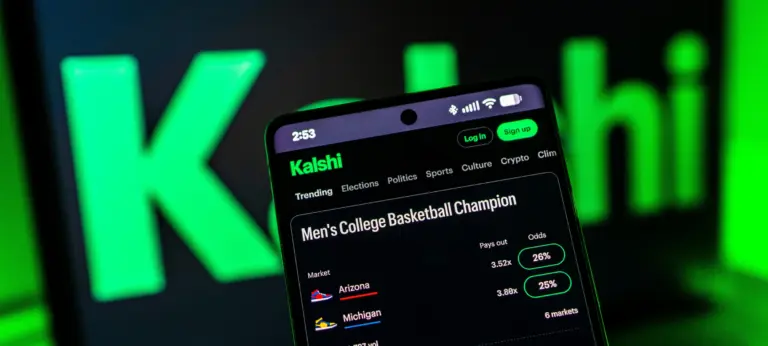
Utah moved to dismiss 14 criminal charges against prediction market platform Kalshi and its co-founders after the company stopped offering trading services in the state. Attorney General Derek Brown confirmed the decision on Nov. 24. However, prosecutors could bring the charges back if Kalshi resumes operations in Utah, while a separate civil lawsuit remains active.
Utah Seeks Dismissal After Kalshi Blocks Local Users
The Utah Attorney General's Office filed a motion on Nov. 23 in the Third District Court seeking to dismiss the criminal case without prejudice. If granted, the dismissal would allow prosecutors to refile the charges if Kalshi returns to the state.
Utah launched a criminal investigation into Kalshi in September before filing charges against the company and its co-founders, Tarek Mansour and Luana Lopes Lara, on Oct. 28. The charges included 12 felony counts of online gambling promotion, one felony count of engaging in a pattern of unlawful activity and one misdemeanor count of gambling promotion.
Prosecutors reconsidered the case after Kalshi agreed to introduce geographical restrictions that prevent users in Utah from accessing its trading services. The company also committed to monitoring attempts to access its services from Utah-based IP addresses.
Brown made the conditions for Kalshi's potential return clear in a statement:
“Kalshi has pulled out of Utah, and if it returns, so will the charges.”
Kalshi Still Faces a Separate Civil Lawsuit
While the move offers some relief to Kalshi and its executives, the company still faces a civil lawsuit from Utah. The state is seeking, among other remedies, to recover profits Kalshi generated from its operations in Utah.
Kalshi's general counsel, Yaakov Roth, welcomed the decision to pursue the dispute through civil litigation rather than criminal prosecution. Roth wrote in a Nov. 24 X post:
“Good faith jurisdictional disagreements should never be criminalized.”
At the heart of the dispute is whether prediction markets should fall under federal derivatives regulations or state gambling laws. Kalshi argues that its event contracts are subject to federal oversight by the Commodity Futures Trading Commission (CFTC).
Utah takes a different position. It considers prediction markets a form of gambling prohibited under state law. The CFTC has also brought a separate legal challenge against Utah over its authority to regulate these markets.
Kalshi's trading suspension followed unsuccessful attempts to secure court protection against the enforcement of Utah's gambling restrictions while the legal dispute continues.
Seven Prediction Market Companies Agree to Leave Utah
Kalshi is not the only prediction market operator facing pressure from Utah. The Attorney General's Office
confirmed that seven companies, including Kalshi, have agreed to stop operating in the state.
Authorities have also sent cease-and-desist letters to several of Kalshi's competitors as part of a broader effort to enforce Utah's gambling restrictions. Utah is one of only two US states that prohibit all forms of gambling, making it a particularly challenging market for platforms offering contracts tied to sporting events.
The Attorney General's Office plans to monitor whether companies comply with these restrictions. It may pursue further civil or criminal action against businesses that offer or promote sports gambling to Utah residents.