

Image Credit: Shutterstock
- Deutsche Bank launched crypto custody for institutional clients in Germany, covering Bitcoin, Ether and stablecoins.
- The bank manages wallets and private keys, with access through Autobahn and its Corporate Bank Portal.
- Tokenization and settlement remain plans, and the custodied assets carry no deposit-guarantee protection.
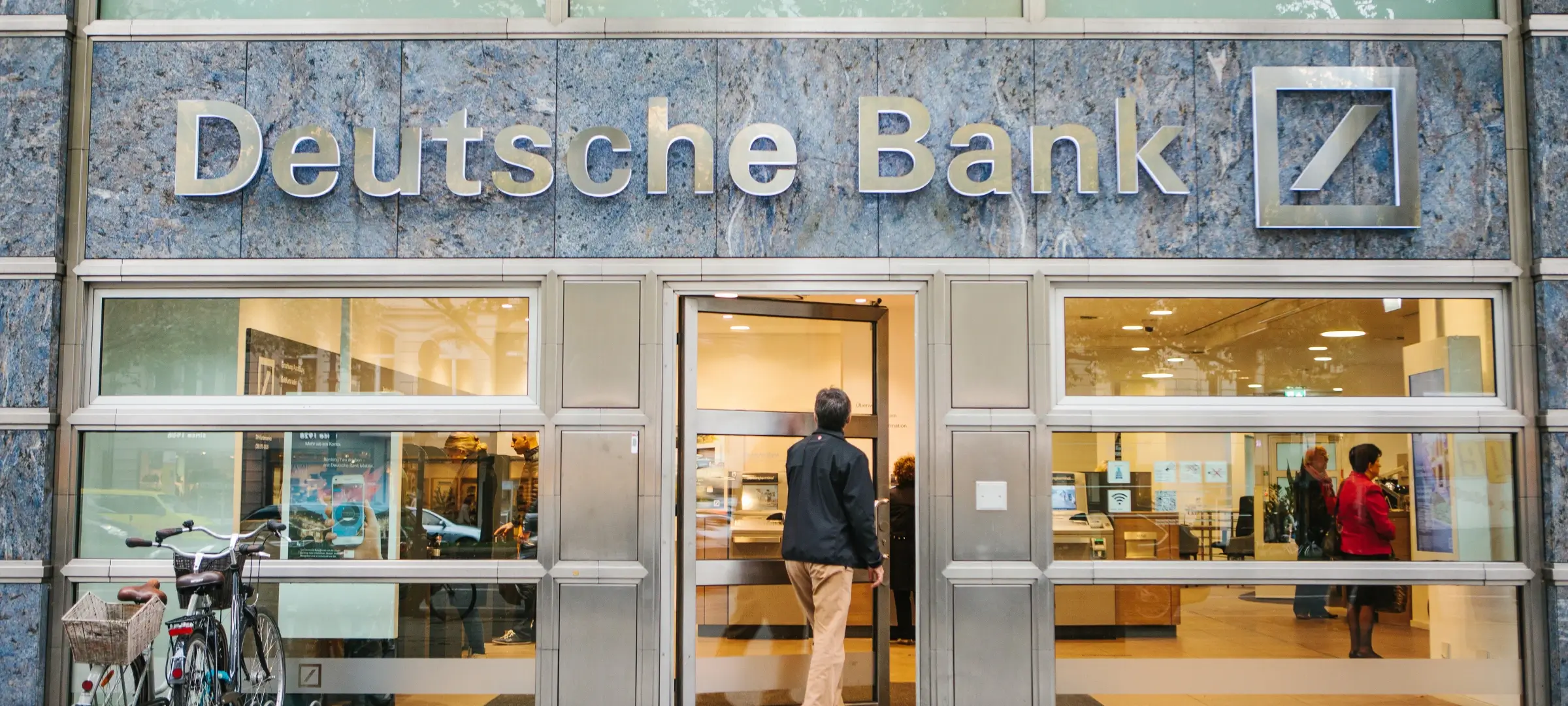
Deutsche Bank’s crypto custody service is now live for paying clients, giving eligible institutions a way to hold and transfer digital assets through Germany’s largest lender.
The bank confirmed the launch on Nov. 11, moving beyond September’s conditional announcement. Its initial focus is corporate and institutional customers in Europe.
Institutions Can Hold Bitcoin, Ether and Stablecoins
The launch lineup includes Bitcoin and Ether, alongside the stablecoins USDC, EURC, and EURAU. Deutsche Bank manages clients’ wallets and private keys, taking on infrastructure that institutions would otherwise need to operate themselves or obtain from another provider.
Customers can access the custody platform through Autobahn, the bank’s digital gateway, and its Corporate Bank Portal. The service covers safekeeping, transfers to third parties and movements between the bank’s warm and cold storage environments.
Availability begins in Germany, with cross-border servicing across Europe limited to local regulations. Eligible customers include companies, asset managers, hedge funds, brokers, custodians and sovereign institutions, with onboarding subject to the bank’s checks and risk criteria. Retail customers are outside the initial offering.
The European Securities and Markets Authority (ESMA) lists Deutsche Bank for custody and transfer services under an Article 60 notification dated Oct. 12, with Germany’s financial regulator, BaFin, as supervisor.
The EU’s Markets in Crypto-Assets Regulation (MiCA) lets existing banks use this notification process instead of seeking a standalone crypto license.
The Bank Manages Security, but Deposit Guarantees Do Not Apply
Private keys are protected using dedicated hardware security modules. The platform combines warm storage with cold storage, which keeps keys offline, and includes backup and recovery arrangements.
Clients can customize their transfer-approval processes. Multi-factor authentication and segregation of client assets sit alongside controls that divide responsibilities among staff and require multiple people to approve important actions.
There is an important limit to putting crypto with a bank, however. The assets remain exposed to price swings, and they do not receive deposit-guarantee protection comparable to eligible bank deposits.
The launch adds to this week’s activity in the custody business. Coinbase separately announced final approval for its U.S. national trust company on Nov. 9, creating a federally supervised entity for its institutional custody operations.
Tokenization and Settlement Remain Expansion Plans
Paul Maley, Deutsche Bank’s global head of trust and securities services, outlined the broader ambition:
“In the medium term we aim to deliver a fully integrated, regulated ecosystem that supports the custody, tokenisation, and settlement of digital assets.”
For now, the operating service centers on holding and transferring crypto. Tokenized financial instruments remain on the product roadmap, while additional assets depend on client demand, internal approvals and regulatory requirements.
When introducing the offering in September, corporate banking co-head Gerald Podobnik set out those conditions:
“The service will be further developed in line with client demand, regulatory requirements and the bank’s risk appetite.”
Deutsche Bank has also expressed interest in taking the offering to Asia. Separately, it confirmed on Nov. 11 that it had signed a memorandum of understanding with Deutsche Asset Management, the majority-owned money manager formerly known as DWS. The agreement covers exploring commercial and technical cooperation in digital assets.