

Image Credit: Shutterstock
- Zcash activated its NU7 upgrade, reducing the target block interval to 25 seconds.
- The upgrade stops holders from spending approximately 12,224 ZEC left in the Sprout pool.
- Block subsidies were cut to one-third to preserve the intended rate of ZEC issuance.
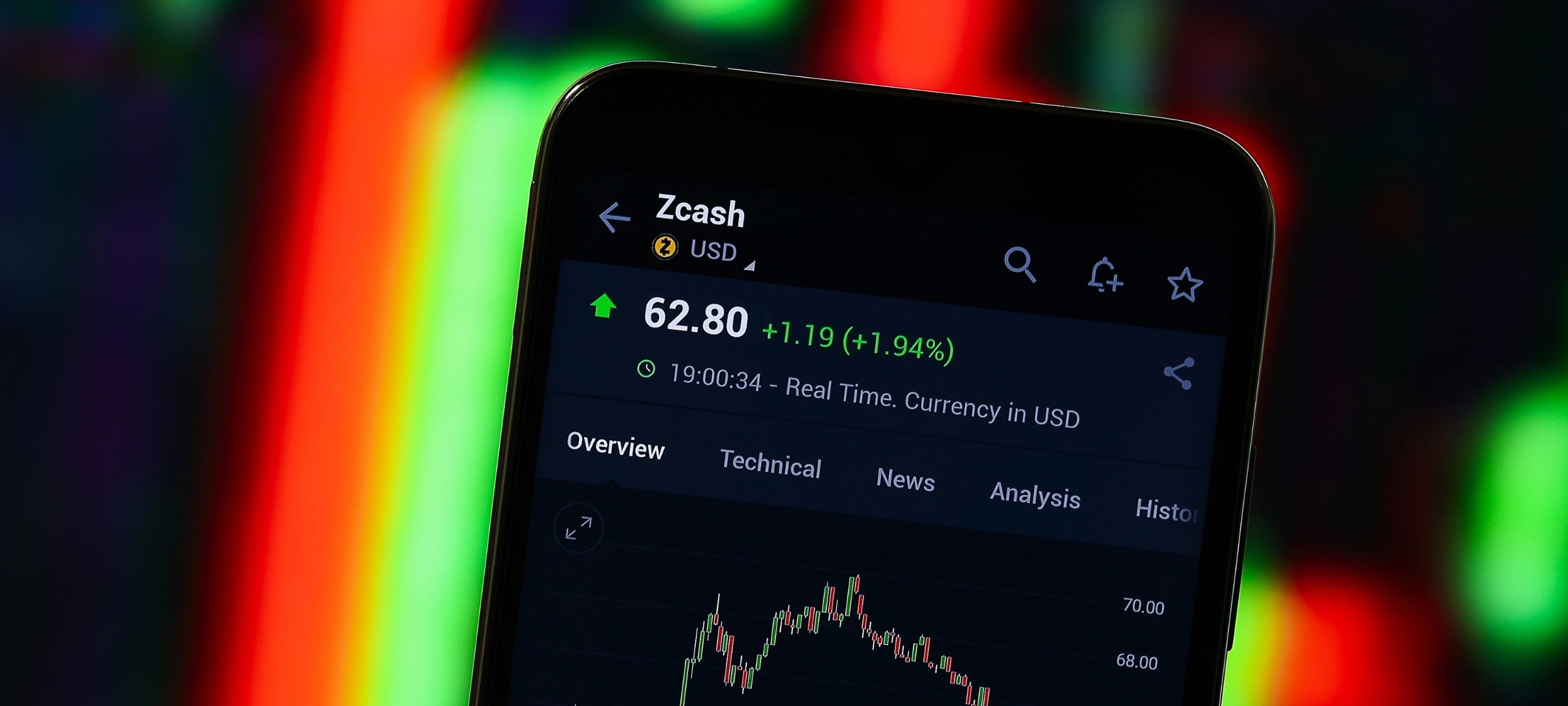
Zcash activated its NU7 upgrade at block 3,543,405 at approximately 02:34 UTC on Nov. 6, reducing the target interval between blocks from 75 seconds to 25 seconds.
The upgrade also stops holders from spending coins left in Sprout, Zcash’s original private transaction pool. Restoring access would require another network change and may never happen.
Sprout Holders Lose Access to About 12,224 ZEC
Sprout transfers require version-4 transactions, which the network now rejects. The supported version-5 and version-6 formats cannot carry Sprout transfers, so updating a wallet alone cannot restore access to those funds.
ZecBlock’s chain data showed 12,224.21 ZEC remaining in Sprout at 10:52 UTC on Nov. 6. Those balances remain recorded in the pool; the upgrade has not burned them.
Developers removed Sprout spending support to reduce the complexity and security burden of maintaining an outdated system. Even with little activity in Sprout, nodes still had to handle its transaction checks and account for their potential use in denial-of-service attacks.
A future upgrade could restore version-4 transactions or introduce another way to retrieve the coins. NU7 includes no such recovery mechanism, and spending may never be re-enabled.
Faster Blocks Shorten the Wait Without Increasing Issuance
For payments waiting on a first confirmation, the new block target reduces the expected wait to roughly one-third of its previous level. Blocks still arrive at uneven intervals, and mining difficulty continues to adjust as the network settles into the new schedule.
Wallets and exchanges set their own confirmation requirements. The time before a deposit is credited therefore also depends on the service receiving it.
Block subsidies have been cut to one-third to match the faster pace, preserving the intended rate of new ZEC issuance. The approximately four-year halving schedule and 21 million ZEC supply cap remain intact.
NU7 also limits shielded transaction activity per block. Those limits are designed to contain the amount of processing and synchronization work that spam transactions can force onto wallets.
The Zcash Foundation estimates they could reduce the maximum data a spam attack forces lightweight wallets to download by about 37%.
Fee Reserve Collects 60% for Future Block Rewards
The Network Sustainability Mechanism now removes 60% of transaction fees from circulation, while miners retain the remaining 40%.
The reserved fees are intended to return through future block rewards under an automatic issuance formula. Redistribution begins at block 8,939,664, so collecting the reserve and paying it back happen at different stages. At the new target pace, that is roughly early 2031.
The mechanism aims to support the network’s security budget as scheduled mining subsidies decline. It recycles previously removed or unclaimed value within the existing supply limit.
Older Wallets and Nodes Need NU7-Compatible Software
The version-4 cutoff extends beyond Sprout. Legacy tools creating transparent or Sapling transactions in that format must also change, although non-Sprout payments can be recreated using a supported format.
Node operators need software that recognizes NU7’s rules, including the support introduced in Zebra 7.0.0. Older nodes can remain online while following a different chain, leaving their operators disconnected from the upgraded network.