

Realcoin Introduced
Tether was initially introduced under the name Realcoin in July 2014.
Search Coin Insider
Sign in to Coin Insider
Save articles, track what you read, and manage email preferences.
Continue with GoogleWe will email you a verification link. You must confirm your email before you can sign in.
Tether Explained
Tether (USDT) is a U.S. dollar-backed stablecoin issued by Tether. It is designed to maintain a value close to $1 and can be transferred across multiple blockchain networks, where it is widely used for trading, payments and moving dollar-denominated value between platforms.
This section explains how USDT is issued and redeemed, how Tether reports and manages the reserves backing the token, and why its market price can sometimes move away from its $1 reference value. It also covers USDT’s history, supported networks, role in crypto markets and the main ways it is used.
See the essential facts about USDT, including its purpose, reference currency, issuer, launch year, supply model and supported blockchain networks.
Tether began in 2014 under the name Realcoin and was renamed later that year. Its first tokens were issued through the Omni Layer, a protocol built on top of the Bitcoin blockchain.
Tether was initially introduced under the name Realcoin in July 2014.
In November 2014, Realcoin was rebranded as Tether.
The first USDT tokens were issued on the Bitcoin blockchain using the Omni Layer protocol.
USDT began on the Omni Layer before expanding to Ethereum, Tron and other blockchain networks. Over time, it developed from a token used mainly by cryptocurrency exchanges into an asset used for trading, transfers, payments and blockchain-based applications.
Its development has largely followed where crypto activity moved. As new networks gained adoption, Tether added support for them, making USDT available across a wider range of wallets, exchanges and on-chain applications.
USDT launched on Bitcoin’s Omni Layer, creating a dollar-linked token that could be transferred and recorded on a blockchain. It was initially introduced as Realcoin before being publicly renamed Tether later that year.
Tether expanded USDT to Ethereum as an ERC-20 token, making it easier to integrate with exchanges, wallets and blockchain applications. The move gave USDT access to Ethereum’s rapidly growing smart-contract ecosystem.
TRC-20 USDT launched on Tron, adding another network for transferring and trading the stablecoin. The integration offered users a faster and lower-cost alternative to moving USDT through previously supported networks.
USDT expanded across additional blockchains as demand grew for wider exchange access, faster transfers and lower-cost settlement. Its multi-chain availability allowed users to select a network suited to each transaction.
Tether expanded its reserve reporting by publishing regular independent assurance opinions and more detailed asset breakdowns. The reports gave users greater visibility into the reserves supporting USDT in circulation.
Tether said KPMG US completed an independent audit of its 2025 financial statements, its first full financial audit. The milestone also marked a move beyond the quarterly reserve attestations used in previous years.
USDT begins with Tether authorizing tokens on a supported blockchain. The tokens enter circulation when they are issued to approved customers and may later return to Tether through redemption.
Once in circulation, USDT can be stored, transferred or traded through compatible wallets, exchanges and applications. Tokens returned to Tether may remain in its treasury for future use or be permanently removed from supply.
Tether creates an authorized quantity of USDT on a supported blockchain. The tokens remain in its treasury and do not enter circulation.
After an eligible customer completes verification and provides the required funds, USDT is transferred from Tether’s treasury into circulation.
Issued USDT can move between supported wallets, exchanges and blockchain applications for trading, transfers and payments.
Eligible verified customers can return USDT to Tether and receive the corresponding fiat value under its redemption terms.
Redeemed USDT returns to Tether’s treasury. It can remain available for future issuance or be permanently destroyed, reducing total supply.
Tether reports that USDT in circulation is supported by reserves that include cash, cash equivalents and other assets. Their value and composition can change as markets move and the amount of USDT in circulation rises or falls.
Reserve Coverage
Tether reports reserve assets against the tokens it has issued. The portfolio may include cash, short-term securities and other assets rather than only bank deposits.
Reporting Scope
Reserve reports cover a specific reporting date and may be published later. Always show the covered period and publication date beside the figures.
Reading the Data
Reserve values are a snapshot of Tether’s financial position at the end of a reporting period. They are not live balances and may change before the next report.
USDT is intended to remain close to $1, but its price is not fixed at exactly $1 on every exchange. Buying and selling activity can cause small differences between individual markets.
Issuance and redemption, exchange liquidity, confidence in Tether’s reserves and regulatory developments can all affect how quickly those differences appear and how long they last.
New USDT can enter circulation when tokens are issued, while redeemed tokens may be held or removed from supply. These processes can help the market respond when USDT moves away from $1.
Markets with deeper liquidity can absorb larger trades with less price movement. On exchanges with limited liquidity, buying or selling pressure may cause a wider USDT peg deviation.
Demand for USDT can increase when traders need a dollar-referenced asset for transfers, settlement or cryptocurrency purchases. Sudden changes in demand may briefly push its market price above or below $1.
Tether’s financial reports provide information about the assets and liabilities behind issued tokens. New disclosures can influence how market participants view the strength of USDT’s reported backing.
USDT’s price depends partly on confidence that it can continue to be used, traded and redeemed. Concerns about reserves, exchanges or access to redemption may place pressure on the peg.
New stablecoin rules can affect where USDT is available, which services may support it and who can use it. Regulatory uncertainty may also influence trading activity and market confidence.
USDT is designed to track the U.S. dollar, but prices on exchanges can move above or below $1 as supply, demand and liquidity change. Tether’s direct acquisition and redemption terms are separate from prices available on secondary markets.
Yes, USDT can temporarily trade away from its $1 reference value during periods of unusual buying or selling pressure. The size and duration of the deviation can depend on liquidity, market confidence and conditions across individual exchanges.
USDT dominance measures Tether’s share of a defined market by market capitalization. It usually refers to USDT’s share of the stablecoin market, although some platforms compare it with the entire cryptocurrency market.
USDT can be sent between compatible wallets, used on supported platforms or exchanged for fiat currencies and other digital assets. The available options depend on the service, trading pair, blockchain network and user’s location.
A USDT to USD or USDT to EUR market converts USDT into a fiat currency, while USDT to USDC exchanges one stablecoin for another. An ETH to USDT pair works in the opposite direction, showing how much USDT is required to buy one ETH.
Find a wallet or exchange that supports USDT.
Choose which asset to exchange for USDT.
Ensure the correct blockchain is used.
Execute the transfer or exchange.
Check that the service supports the required currency, trading pair and blockchain network before transferring USDT. Review the applicable fees, withdrawal options and verification requirements, then confirm every wallet address and network selection carefully.
Confirm the service operates in your jurisdiction and supports your required trading pair.
Review the verification, account and withdrawal requirements before transferring USDT.
Confirm that the deposit and withdrawal networks support the same version of USDT.
Compare conversion, network and withdrawal fees, minimums and account limits.
Verify the wallet address and selected blockchain before sending any USDT.
Keep the conversion details, fees, transaction hash and value at the time of transfer.
Tax Note Converting USDT into fiat currency or another crypto asset may create tax-reporting obligations. The applicable treatment depends on your jurisdiction and individual circumstances.
Explore practical guides that explain how USDT works, how to buy it and how to move it safely between platforms and wallets.
Whether you want a broader overview or help with a specific task, these guides cover the main things readers most often need to know about Tether.
 USDT Guide
Tether (USDT): Ultimate 2025 Guide
What Is Tether (USDT)? Tether (USDT) is probably the best-known cryptocurrency pegged to another currency in the market. As a ‘stablecoin’, Tether is associated with the…
Read the Guide →
USDT Guide
Tether (USDT): Ultimate 2025 Guide
What Is Tether (USDT)? Tether (USDT) is probably the best-known cryptocurrency pegged to another currency in the market. As a ‘stablecoin’, Tether is associated with the…
Read the Guide →
 USDT Guide
How to Buy Tether USDT: A Beginner’s Guide
A beginner's guide to buying Tether (USDT), covering choosing an exchange, picking the right network, and storing it safely.
Read the Guide →
USDT Guide
How to Buy Tether USDT: A Beginner’s Guide
A beginner's guide to buying Tether (USDT), covering choosing an exchange, picking the right network, and storing it safely.
Read the Guide →
 USDT Guide
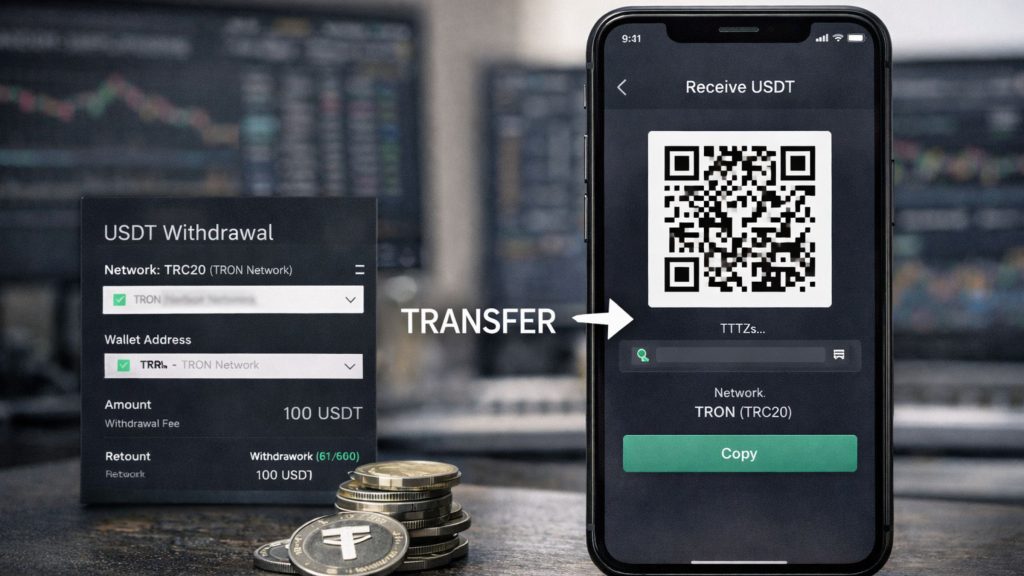
How to Transfer USDT From an Exchange to a Wallet Safely
Moving USDT from an exchange to a wallet is a basic crypto task, but it is also one of the easiest places for new users to…
Read the Guide →
USDT Guide
How to Transfer USDT From an Exchange to a Wallet Safely
Moving USDT from an exchange to a wallet is a basic crypto task, but it is also one of the easiest places for new users to…
Read the Guide →