

Image Credit: Shutterstock
- A federal judge denied Novig's bid to stop New York from applying state gambling laws to its sports contracts.
- Judge Colleen McMahon found the sports contracts are not swaps and that state licensing can coexist with federal rules.
- Novig filed a notice of interlocutory appeal on Nov. 10, so the regulatory dispute continues.
Sports prediction market Novig has lost its bid to stop New York from applying gambling laws to its platform, despite its status as a federally registered exchange.
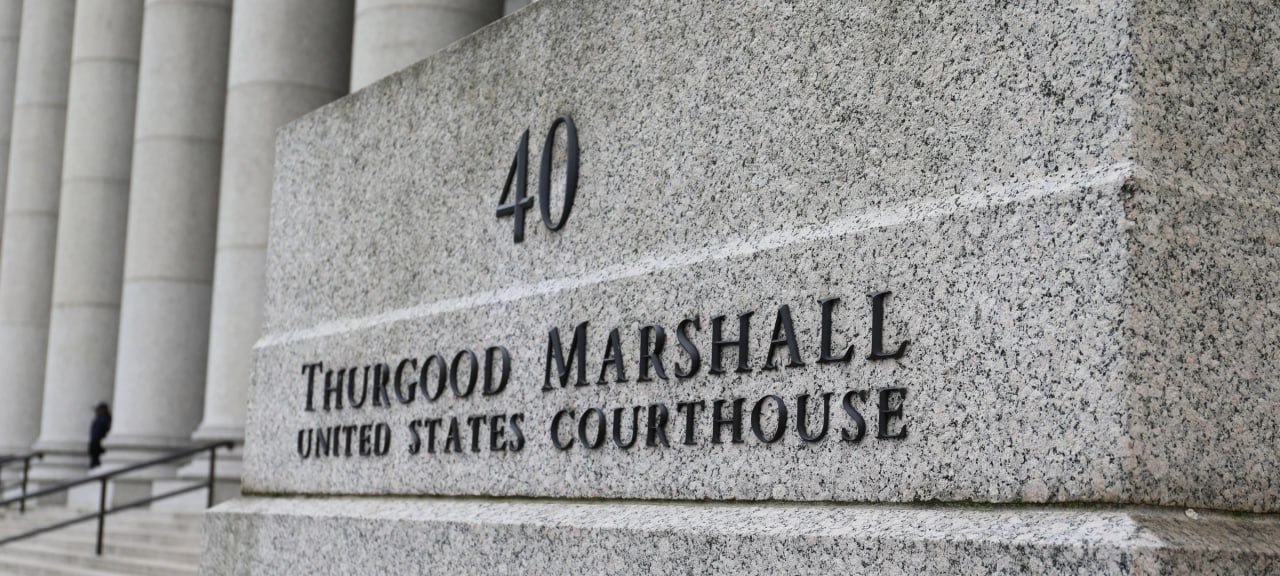
U.S. District Judge Colleen McMahon denied preliminary protection in a Nov. 10 order. The decision leaves the state able to require a gambling license or prohibit Novig’s sports contracts.
Federal Registration Did Not Settle the Contract Question
Ludlow Exchange, the company operating Novig, received designated contract market status from the Commodity Futures Trading Commission (CFTC) on June 16. It began offering sports event contracts to New York customers in August.
Novig matches customers taking opposite positions on sporting outcomes rather than taking the other side of each trade itself. Its markets include game winners, point spreads, combined scores, parlays and player-performance bets.
The company sued Attorney General Letitia James and state gaming officials, arguing that the Commodity Exchange Act (CEA) gives the CFTC exclusive authority over its contracts. That protection depended on the sports contracts qualifying as swaps under federal law.
McMahon concluded that Novig had not demonstrated a likelihood of winning that argument. Federal registration of the exchange, she explained, did not decide the legal classification of every contract traded on it.
Sports Bets Failed the Judge’s Financial-Connection Test
The judge accepted that sporting outcomes can count as events or contingencies. But the swap definition also requires a connection to potential financial, economic or commercial consequences, which she interpreted in the context of financial markets and risk management.
Simply winning or losing money on a bet was insufficient. McMahon reasoned that Novig’s broader interpretation could pull ordinary sportsbook bets and even informal wagers between friends into federal derivatives law.
Novig offered a different view, arguing that sports contracts could hedge business risks, such as a hotel losing bookings when a local team exits the playoffs. The judge rejected that example as hypothetical and pointed to Novig’s recreational sports-betting audience.
Her assessment of the product was blunt:
“[…] Novig’s sports event contracts are sports betting.”
Judge Says State Licensing Can Coexist With Federal Rules
The order also gives New York an alternative basis for enforcement. McMahon concluded that even if the contracts were swaps, federal law would not automatically displace the state’s gambling rules.
She distinguished federal oversight of exchanges from state regulation of betting activity conducted through them. In rejecting Novig’s argument that the two systems conflicted, she wrote:
“[…] state gambling regulations are not obstacles to the CEA’s federal objective.”
Novig had relied partly on the CFTC’s August instruction that Kalshi continue operating during its New York dispute. McMahon found that Novig could instead seek state licensing and use location restrictions to comply with both systems.
The decision concerns Novig’s request for temporary protection while the lawsuit proceeds. The broader regulatory dispute is still ongoing, as the Ninth Circuit ruled against Kalshi in Nevada, while the Third Circuit had previously supported it in New Jersey.
The Novig docket records a notice of interlocutory appeal on Nov. 10, providing a next step beyond the injunction denial.