

Image Credit: Wikipedia
- Ethereum co-founder Vitalik Buterin and researcher Justin Drake are urging the crypto industry to prepare for accelerated cryptographic threats driven by artificial intelligence.
- Drake proposed a controlled bunker mode where large holders gradually move assets into fresh addresses with hidden public keys to mitigate potential signature system vulnerabilities.
- Buterin warned that poorly executed wallet migrations can cause direct losses and noted that AI advancements could also weaken post-quantum cryptographic systems.
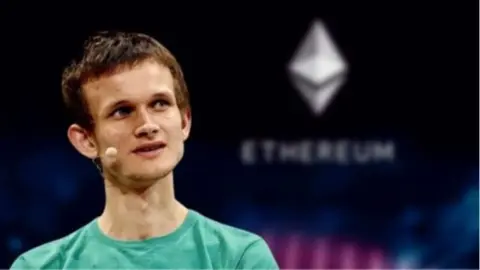
Ethereum co-founder Vitalik Buterin has backed calls for the crypto industry to prepare for faster-than-expected cryptographic threats as artificial intelligence accelerates mathematical research.
The warning follows Ethereum researcher Justin Drake’s proposal for a controlled “bunker mode” that would reduce exposure if AI-assisted mathematics finds a way to weaken ECDSA, a signature system widely used by Ethereum, Bitcoin and other blockchains. Neither researcher says ECDSA has been broken.
Drake Wants Large Holders to Start With Fresh Addresses
Drake recommended gradually moving assets into addresses that have never signed a transaction, leaving their public keys hidden behind a hash. Once an address signs, its public key can become visible on-chain, potentially increasing exposure if a future cryptographic breakthrough makes private-key recovery practical.
Drake said large holders and institutions should move first and rotate remaining funds after an address is used. He warned against rushing, arguing that a disorderly migration could create more risk than the threat it is intended to address.
Buterin Says AI Could Also Weaken Post-Quantum Systems
Buterin agreed that AI-driven mathematical progress deserves attention but cautioned holders against scrambling into new wallets. He said keeping funds in unused addresses is sensible when easy to do, while poorly executed migrations can themselves lead to losses.
His concern also extends beyond elliptic-curve cryptography. Buterin said lattice-based systems could face reduced security margins if AI becomes better at discovering mathematical shortcuts, favoring more conservative parameters and hash-based constructions where practical.
OpenAI Math Release Sharpens Cryptographic Security Debate
The discussion accelerated after OpenAI published a large collection of mathematical results generated by an internal frontier model on Oct. 6.
Drake cited the pace of AI-assisted mathematical progress when arguing that an ECDSA breakthrough could, in a worst-case scenario, arrive before sufficiently powerful quantum computers.
No practical attack against ECDSA has been demonstrated. The immediate proposal is preparation rather than an emergency migration, with Ethereum researchers pushing for stronger cryptographic agility before any concrete break forces users to act.