

Image credit: Shutterstock
- The SEC issued a conditional no-action response regarding Canton Coin minting.
- The assurance applies only to specified programmatic minting under described circumstances.
- Different operating conditions could lead to different conclusions for other projects.
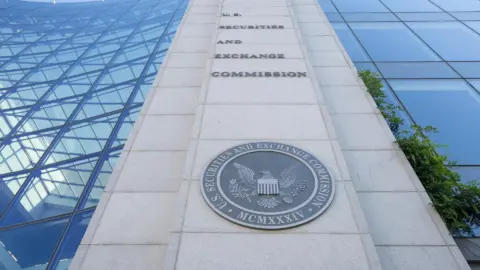
SEC issued a Nov. 3 no-action response covering Canton Coin’s programmatic minting, offering conditional assurance that it would not recommend enforcement over specified registration requirements. For qualifying validators and application providers, that reduces uncertainty around earning newly minted coins under the described network rules.
The position depends on the facts submitted by Digital Asset’s counsel. Different operating conditions could produce a different conclusion, limiting how far other projects or transaction structures can rely on the response.
Assurance Covers Specified Minting Activities
The response covers programmatic minting by Super Validators, Validators, and application providers relying on counsel’s opinion, under the circumstances described, without registration under Section 5 of the Securities Act or Section 12(g) of the Exchange Act. It addresses those activities rather than granting unrestricted clearance for every Canton-related product.
SEC also accepted the description of Canton Coin as a digital commodity. Its reasoning relied particularly on representations that the coin’s value comes from network operation and supply and demand, rather than expectations of profits from others’ essential managerial efforts.
Network Activity Determines Token Rewards
Digital Asset’s submission describes Canton Coin as the token used to pay fees for the Global Synchronizer, infrastructure that coordinates transactions across Canton applications. Participants can mint coins for providing infrastructure or operating applications, with rewards determined through protocol-defined activity records.
Coins used to pay network fees are burned, while qualifying participants mint new coins. For holders, supply therefore reflects both issuance and network usage, rather than a fixed supply or a guaranteed reduction over time.
Counsel also represented that there was no initial coin offering, pre-mine or pre-launch allocation. Minting began after the network became functional, separating the described arrangement from fundraising tied to a promise to build a future network.
Governance Representations Are Central to the Position
SEC relied on the representation that Canton has no central party. Counsel described changes to the Global Synchronizer’s protocol as requiring approval from at least two-thirds of Super Validator Node Operators, with neither Digital Asset nor the Canton Foundation able to dictate those changes unilaterally.
That structure matters because the assurance rests partly on who controls network decisions. The letter expresses SEC’s enforcement position only and explicitly provides no legal conclusion on the issues presented.