Trump’s Possible AI Czar Pick, Jay Clayton, Built the SEC’s Early Crypto Enforcement Record


Image Credit: Shutterstock
Key Takeaways
- Clayton is reportedly close to the AI czar job, which appears to focus on the AI Force and the domestic AI industry rather than crypto policy.
- His SEC tenure produced 57 enforcement cases against digital asset businesses and the Ripple suit, which the agency later dropped under Chairman Paul Atkins.
- Clayton calls AI a national security issue and rejects calls to pause its development.
Jay Clayton, the former U.S. Securities and Exchange Commission chairman, is reportedly close to being named the Trump administration’s artificial intelligence czar, according to a report on the pending appointment.
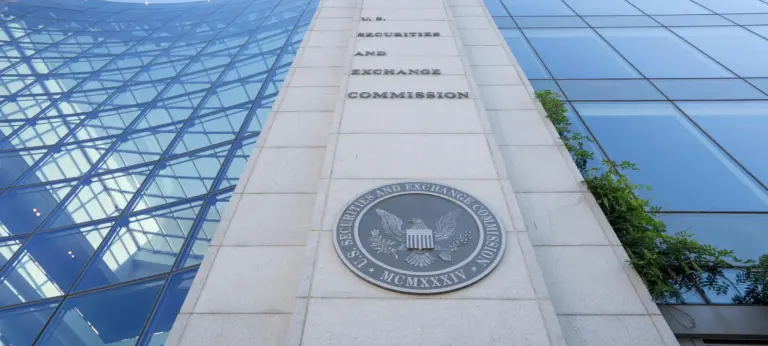
Clayton’s record at the SEC includes building the agency’s early enforcement-focused approach to crypto regulation, a history that could draw renewed attention from the AI industry if he takes the new role.
A Different Remit Than the Administration’s First Czar
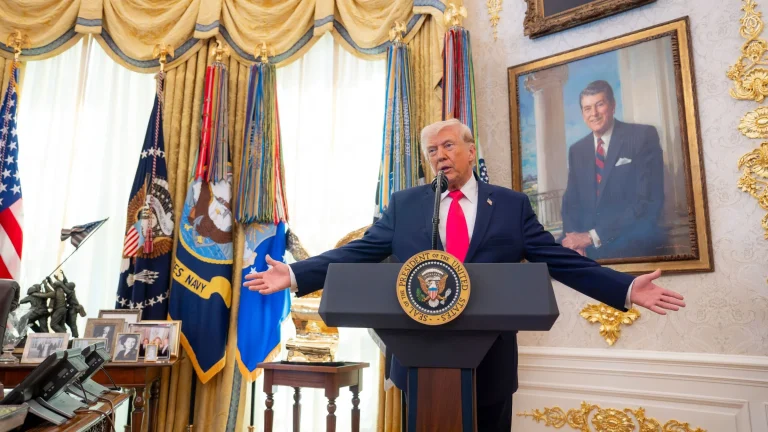
The reported AI czar position appears to carry a narrower mandate than the combined crypto-and-AI role David Sacks held earlier in the administration.
If Clayton is appointed, the job would focus on overseeing the administration’s AI Force and the rapidly growing domestic AI industry, though the specific scope of the role remains unclear. The administration has pushed back against critics raising safety concerns about increasingly capable AI systems.
The position does not appear to include crypto policy, despite substantial overlap between the two fields. Sacks stepped down from his crypto czar role in March, after which the White House’s crypto policy work shifted to adviser Patrick Witt. Clayton did not respond to a request for comment on the reported appointment.
From U.S. Attorney to Potential AI Czar
Clayton most recently served as U.S. attorney for the Southern District of New York before Trump appointed him director of national intelligence earlier this year. Before that, during Trump’s first term, Clayton chaired the SEC, where his record as a regulator of emerging financial technology could draw scrutiny from the AI industry if he moves into the new role.
The regulation-by-enforcement approach to crypto oversight that the industry later criticized under Democratic-appointed SEC Chairman Gary Gensler had its origins in Clayton’s tenure.
As he was preparing to leave the agency in December 2020, Clayton’s SEC filed its enforcement case against Ripple Labs, alleging the company had failed to register roughly $1.3 billion in XRP token sales as securities. Current SEC Chairman Paul Atkins, another Trump appointee, later moved to drop the case, which the agency formally dismissed in 2025.
The Ripple case was the final chapter of a broader enforcement record built during Clayton’s SEC tenure. He established the agency’s Cyber Unit in 2017 to focus on emerging technology risks and began policing initial coin offerings and related industry activity.
By the time Clayton left the agency in 2020, the SEC’s own accounting of his tenure cited 57 enforcement cases brought against digital asset businesses, blockchain companies and ICOs, with the agency describing the focus as combating investor fraud involving digital asset securities and violations of federal securities registration requirements.
A Boss Who Later Became a Crypto Booster
Clayton’s SEC enforcement record took shape under a president who was a vocal crypto skeptic during his first term. In a 2021 interview, after leaving office, Trump said of cryptocurrencies broadly that he believed they should be regulated “very, very high.”
Trump’s stance shifted substantially in subsequent years, moving from launching a line of personal NFTs in 2022 to introducing a self-referential memecoin and taking a financial stake in World Liberty Financial. He campaigned as a crypto-friendly candidate in 2024 and, upon returning to office, appointed Sacks as the administration’s first combined crypto and AI czar.
Clayton’s Recent Comments on AI Policy
Before returning to government service, Clayton spent several years on the board of private equity firm Apollo Global Management, which has committed billions of dollars to AI and digital infrastructure investments. In a recent television interview, Clayton described artificial intelligence as a national security issue while rejecting calls to pause the technology’s development.
“I don’t think any American should think that that’s a good strategy.”
Trump announced the creation of the AI Force in September on his Truth Social platform, comparing it to the Space Force he established during his first term and saying he would name an AI czar in the near future, describing the eventual pick as a “high IQ” individual.
Whether that pick is Clayton, and what his history at the SEC might mean for how the role approaches AI oversight, remains to be confirmed.