

Image Credit: Shutterstock
Key Takeaways
- The SEC’s proposal would let a blockchain become the “master security file,” eliminating the duplicate off-chain shareholder records many tokenized securities currently maintain.
- Transfer agents would still need to handle administrative functions like inheritance cases and legal notices, and processing windows could shrink from three-to-five days to one day.
- The SEC opened a 60-day public comment period running through early November; the proposal has not been adopted and remains subject to change.
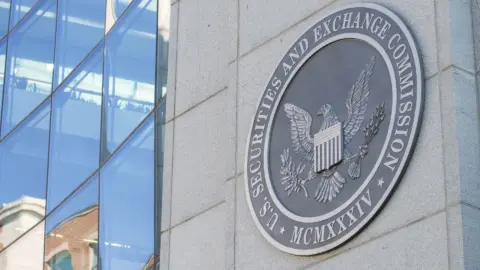
The Securities and Exchange Commission has proposed allowing electronic databases, including blockchain ledgers, to serve as the official legal record of securities ownership for the first time.
The proposal, filed last week, would overhaul transfer-agent rules that have remained largely unchanged for five decades. If adopted, it could eliminate the duplicate off-chain shareholder records that many tokenized securities still rely on today.
The Dual-Ledger Problem Facing Tokenized Securities
Companies that put stocks on a blockchain currently face a structural mismatch. The on-chain ledger can show in real time who holds a given token, but the legally recognized shareholder record exists somewhere else entirely, typically in a traditional off-chain database maintained by a transfer agent.
When a legal dispute arises over which record actually controls, lawyers currently default to the off-chain record as the authoritative one, even when the blockchain data is more current.
That gap forces many tokenization projects to maintain two parallel systems, the token ledger and the official shareholder register, and reconcile them after every transfer to keep both in sync.
What The Proposal Would Change
Under the SEC’s proposal, a blockchain could become what the industry calls the master security file, replacing the parallel off-chain ownership record that tokenized securities have relied on.
Joris Delanoue, CEO of SEC-registered on-chain transfer agent Fairmint, and Eli Cohen, chief legal officer at fund tokenization firm Centrifuge, both described the proposal as a meaningful shift in how blockchain fits into regulated market infrastructure. Delanoue said:
“The master securityholder file used to be paper in a filing cabinet. Today it is a database. The proposal recognizes that blockchain can be that database, not merely a copy of it.”
Cohen said the change could collapse today’s two-ledger setup into what he called a one-step process, with the blockchain itself serving as the master security file.
He added that the current dual-record structure creates more than administrative friction: in a company insolvency or bankruptcy, having two ledgers that could tell different stories about ownership creates significant legal complication.
The proposal does not make tokenized securities fully permissionless. A public blockchain could still hold the master ownership record while identity checks, transfer restrictions and other regulatory controls remain built directly into the token itself, according to Delanoue.
Transfer Agents Still Carry Real Obligations
Firms that want to serve as the official record-keeper under the new framework would still need to handle the administrative functions transfer agents have always managed: processing shareholder deaths and inheritance cases, handling legal notices, updating mailing addresses, enforcing ownership restrictions and correcting records when something goes wrong.
Some of those functions remain physical rather than digital. Delanoue said transfer agents must receive, open, identify and act on mailed documents under prescribed procedures, meaning a company cannot rely on a smart contract alone to satisfy the full range of transfer-agent obligations.
Firms that have acquired transfer agents or obtained transfer-agent licenses as part of their tokenization push will need staff, systems and internal controls capable of handling those requests reliably, not simply blockchain infrastructure.
Faster Processing Requirements Add Pressure
The proposal would also tighten the timeline transfer agents have to process incoming mail and documentation. Current rules allow a three-to-five-day processing window; the SEC’s proposal could reduce that to one day.
That compressed timeline raises the operational bar for any firm seeking to operate as a transfer agent under the new framework.
Cohen said some tokenization firms may ultimately conclude that running the full transfer-agent operation themselves is more burdensome than expected, and instead choose to rely on established providers for parts of the process rather than building that capacity internally.
Comment Period And What Happens Next
The SEC has opened a 60-day public comment period on the proposal, running through early November. Cohen said he expects a substantial volume of comments from both traditional financial firms and blockchain-native companies during that window, given how directly the proposal touches the legal status of tokenized ownership records.
The proposal has not been adopted and remains subject to change based on the comments the SEC receives. Its ultimate scope, including how strictly the agency defines which blockchain systems qualify as acceptable master security files, will depend on how that comment process unfolds.