The Biggest Bitcoin Farms in the World in 2026

Key Takeaways
- Riot’s Rockdale site disclosed a capacity of 700 MW, but that figure is not fully dedicated to Bitcoin mining.
- Four of the five largest disclosed facilities are in Texas, with Bitdeer’s 500 MW Bhutan site the only exception.
- Major mining campuses are shifting toward AI and data centers, making total power capacity a weaker proxy for Bitcoin output.
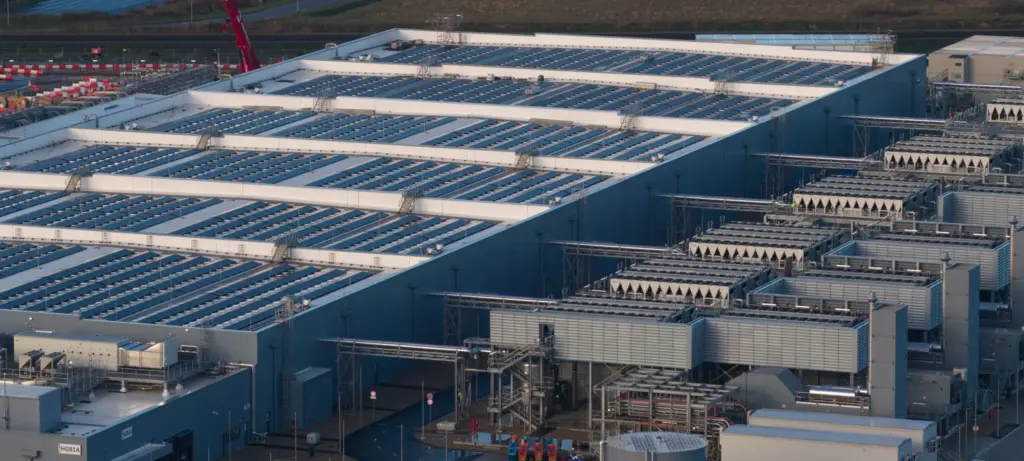
The Bitcoin mining landscape is rapidly evolving, with significant developments in large-scale operations worldwide. Among these, Riot Platforms’ 700 MW Rockdale campus stands out as the largest publicly disclosed Bitcoin mining site currently known.
It is important to note that the figures presented reflect site infrastructure rather than continuous electricity consumption, Bitcoin production, or capacity solely allocated for mining purposes.
Additionally, distinctions exist between developed, operating, and online capacities, which are crucial for understanding the current state of these facilities.
The Five Biggest Bitcoin Farms in the World 2026
| Rank | Facility | Location | Operator | Reported Capacity | Measurement | Current Status |
|---|---|---|---|---|---|---|
| 1 | Rockdale Facility | Rockdale, Texas | Riot Platforms | 700 MW | Developed capacity | Bitcoin mining and data center leasing |
| 2 | Childress Facility | Childress, Texas | IREN | 650 MW | Operating data center capacity as of December 31, 2025 | Mining transitioning to AI Cloud Services |
| 3 | Rockdale Data Center | Rockdale, Texas | Bitdeer | 563 MW | Online electrical capacity | Crypto use; AI and colocation transition under evaluation |
| 4 | Jigmeling | Bhutan | Bitdeer | 500 MW | Online electrical capacity | Crypto mining |
| 5 | Corsicana Facility | Navarro County, Texas | Riot Platforms | 400 MW | Developed capacity | Bitcoin mining with further data center development planned |
1. Riot Platforms’ Rockdale Facility, Texas: 700 MW
Riot reports 700 MW of developed capacity at Rockdale, divided between Bitcoin mining and data center leasing. The figure describes the site’s infrastructure rather than the amount of power used for mining at any moment. Riot does not disclose a facility-level hash rate, so Riot’s companywide hash-rate figures should not be treated as Rockdale’s output.
The campus is moving toward mixed-use infrastructure. In January 2026, Riot signed a 10-year AMD lease covering an initial 25 MW of critical IT load. An April amendment increased the committed deployment to 50 MW, with potential expansion to 200 MW.
Riot intends to convert the site’s full 700 MW of gross power capacity for data center tenants. Rockdale leads this comparison but should not be presented as the undisputed world’s largest Bitcoin mine.
2. IREN’s Childress Facility, Texas: 650 MW
IREN reported approximately 650 MW of operating data center capacity and around 40 EH/s of installed hash-rate capacity at Childress as of December 31, 2025. The wider campus has 750 MW of total power capacity, but the additional capacity was not yet operating.
Childress is now undergoing a more fundamental change. IIREN is developing liquid-cooled infrastructure for GPU workloads as part of its broader AI Cloud Services expansion. In May 2026, the company said it plans to transition its remaining Bitcoin-mining operations to AI Cloud Services and expects mining at Childress to cease over time.
Its 650 MW should therefore not be described as entirely or permanently dedicated to Bitcoin mining.
3. Bitdeer’s Rockdale Data Center, Texas: 563 MW
Bitdeer reports 563 MW of online electrical capacity at its Rockdale site, which is separate from Riot’s nearby campus. Both occupy parts of the former Alcoa aluminum-smelter complex.
Bitdeer completed a 100 MW hydro-cooling conversion at the facility in 2025. Hydro-cooling refers to liquid cooling, not hydropower or the site’s energy source. The company continued to list Rockdale as an online crypto facility in June 2026 while evaluating a transition to colocation and AI Cloud services.
4. Bitdeer’s Jigmeling Facility, Bhutan: 500 MW
Bitdeer reports 500 MW of online electrical capacity at Jigmeling and identifies its current use as crypto mining. Construction was completed in 2025 after phased energization, making it the only facility outside the U.S. in this ranking.
The project grew from Bitdeer’s 2023 partnership with Druk Holding and Investments, the commercial arm of Bhutan’s government. The partners proposed a fund of up to $500 million to support digital asset mining and related projects. Bitdeer describes its Bhutan operations as powered primarily by hydropower and carbon-free energy; those remain company claims.
5. Riot Platforms’ Corsicana Facility, Texas: 400 MW
Riot completed the first 400 MW phase of Corsicana in 2024, using four 100 MW buildings equipped with immersion cooling. That capacity supports Bitcoin mining, while further development is increasingly aimed at AI and other high-density computing workloads.
The Corsicana campus has approval for approximately 1 GW, but the remaining 600 MW is still in development and excluded from the ranking. Corsicana shows why approved, planned and operating capacity are not interchangeable.
Why Texas Hosts So Many Large Bitcoin Farms
Four of the five sites are in Texas. The state offers large industrial properties, existing transmission infrastructure and a wholesale electricity market in which prices move with supply and demand. Former industrial sites can be especially attractive because they already have grid connections and substations designed for heavy loads.
Mining facilities can also reduce consumption quickly when grid demand or power prices rise. Some participate in ERCOT programs, while others curtail when high electricity prices make mining unprofitable.
Curtailment can support grid flexibility, but it is not the same as producing electricity. Operators also face extreme weather, volatile prices and local concerns about noise, water use and infrastructure strain.
How the Bitcoin Mining Map Has Changed Since 2018
The largest disclosed sites looked very different in 2018, when China hosted a major share of global Bitcoin mining.
China’s National Development and Reform Commission ordered authorities to restrict new mining projects and phase out existing operations in September 2021. Older sites near Dalian therefore lack the current evidence required for this ranking.
Other former contenders have also fallen away. Giga Watt filed for Chapter 11 bankruptcy in November 2018, while sites previously reported near Moscow and in Linthal, Switzerland, lack current facility-level disclosures.
Since then, large publicly disclosed mining capacity has expanded significantly in Texas, while Bhutan has emerged through Bitdeer’s partnership with Druk Holding and Investments.
Bitcoin Farms Are Becoming General-Purpose Data Centers
Bitcoin miners control assets AI operators need, including grid connections, substations, land, cooling infrastructure and access to large amounts of power. However, mining buildings still require major upgrades to networking, redundancy and cooling before they can host dense GPU clusters.
Riot and Bitdeer continue operating substantial mining capacity while expanding into AI infrastructure. IREN has gone further, announcing plans to transition its remaining mining operations and eventually cease mining at Childress.
A campus can remain active while its workload mix changes, and its total electrical capacity can stay steady even as the share used for Bitcoin mining falls. Capacity remains one of the most comparable facility-level metrics available, but it becomes meaningful only when paired with a current account of how each site is being used.
Disclaimer
The content on this page is for informational purposes only and does not constitute financial, investment, or legal advice. Cryptocurrency investments carry risk, including the possible loss of principal. Always do your own research and consult a qualified professional before making financial decisions.



How to Set Up a Crypto Wallet Safely as a Beginner

How to Buy Solana: A Beginner’s Guide