

Image Credit: Shutterstock
Key Takeaways
- O’Leary said he expected the Clarity Act’s Senate defeat, but predicts negotiations resume in Q1 or Q2 of next year regardless of midterm outcomes.
- He pointed to the House Ways and Means Committee’s advancing Digital Asset Tax Certainty Act as pressure that will force Congress back to unresolved regulatory questions like staking.
- The SEC continues advancing crypto policy on its own authority in the meantime, including proposals for tokenized stock trading and blockchain-based securities records.
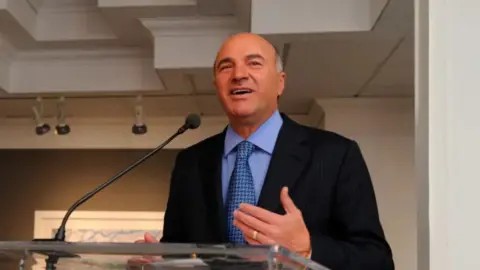
Investor Kevin O’Leary said Thursday he expects Congress to revisit the Clarity Act in the first or second quarter of next year. He pointed to a separate crypto tax bill advancing through the House as evidence lawmakers will eventually need to return to broader market-structure legislation.
He made the comments at the Avalanche Summit in New York, two days after the Clarity Act failed to clear a Senate procedural vote.
A Predicted Failure, Not a Surprise
O’Leary said he had not expected the bill to advance when it came up for a vote Tuesday, falling short of the 60 votes needed to proceed. The Digital Asset Market Clarity Act had been the crypto industry’s central legislative priority for more than a year, backed by extensive lobbying spending and years of negotiation between Republican and Democratic sponsors.
“The chances of Clarity passing, in my view, were zero, and that’s what happened.”
The Clarity Act sought to establish a broader federal framework for crypto markets, including how the Securities and Exchange Commission and the Commodity Futures Trading Commission would divide oversight responsibilities, particularly around the CFTC’s authority over crypto spot markets.
O’Leary characterized Tuesday’s outcome as a delay in that effort rather than its end, distinguishing his own outlook from the broader disappointment expressed by many industry participants following the vote.
A Tax Bill Moving Through the House
O’Leary pointed to a separate measure, the Digital Asset Tax Certainty Act, which the House Ways and Means Committee advanced this week. That bill would establish tax rules covering staking, mining, small crypto transactions and broker reporting requirements, areas of crypto activity that currently lack clear federal tax treatment.
He argued that the tax bill’s progress creates pressure that market-structure legislation alone had not generated. He stated that Congress would be setting rules for how crypto activities are taxed without having settled the underlying question of how the industry itself should be regulated.
In his view, that mismatch between tax policy and regulatory policy is not sustainable over the long term.
“Once you tax, you’ve got to have policy.”
O’Leary said he expects the tax bill’s momentum to draw attention back to unresolved regulatory questions, including how activities like staking should be treated under securities and commodities law.
“We’re going to tax staking. You know with certainty that policy’s coming in Clarity, and it has to.”
A Timeline Independent of Midterm Outcomes
O’Leary said he expects lawmakers to return to Clarity Act negotiations after the November midterm elections regardless of which party controls Congress afterward.
“When will it come? Probably in the first or second quarter after the midterms.”
His prediction is his own assessment rather than a confirmed legislative timeline, and Congress has not scheduled a date to revisit the bill.
Any renewed effort would need to address the same disputes that contributed to Tuesday’s shortfall, including ethics provisions tied to senior officials’ crypto holdings and disagreements over how the bill’s “qualified transaction” definition would affect state-level enforcement authority.
In the meantime, federal regulators have continued advancing crypto policy through existing rulemaking authority rather than waiting for legislation.
The SEC has moved forward with a proposed exemption allowing tokenized U.S. stocks to trade on public blockchains for a five-year trial period. The agency has separately proposed letting blockchain records serve as the official record of securities ownership.
SEC Chairman Paul Atkins said this week that the agency would continue acting within its existing authority to provide regulatory certainty to the industry while Congress works toward a broader legislative framework.